Hotel Komune · Keramas, Bali — Founder’s Notebook
Thirty years of surfing, one extraordinary wave, and the philosophy behind what I believe is Bali’s best surf resort.
By Tony Cannon. Founder, Hotel Komune Resort & Beach Club Bali.
Chapter 1: Why I’m Writing This
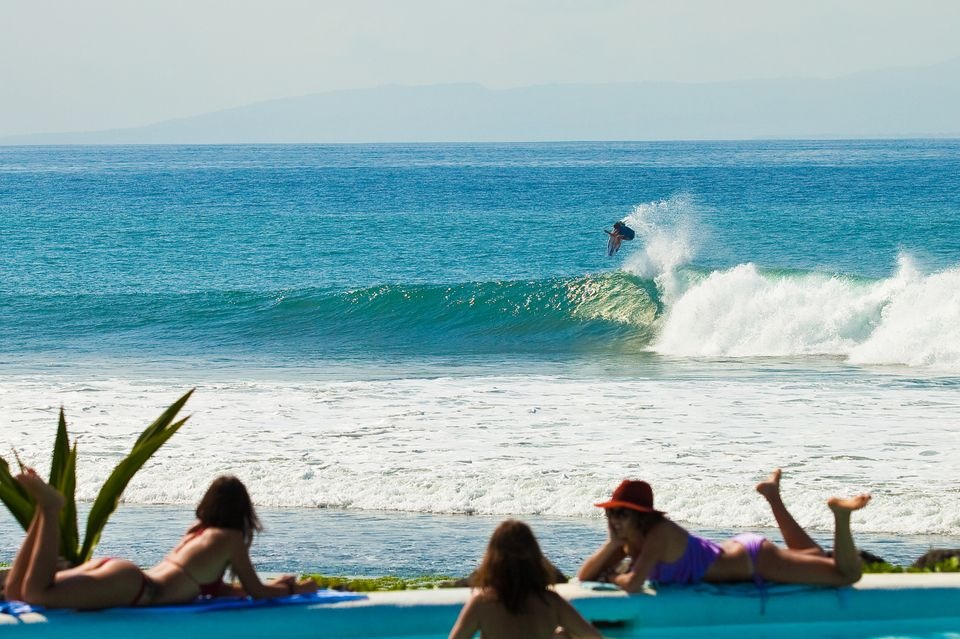
It happens most weeks at the beach club. A guest gets talking to me over dinner, usually with a set breaking fifty metres from the table, maybe a barrel peeling under the floodlights behind us. I can see the question forming before they ask it. They’ve been here a few days by then. They’ve noticed things. That the resort disappears into jungle when you look back at it from the water. That the staff all seem to be from the same village, and treat guests like close family, because in a sense they are. That somehow there’s a world-class wave breaking in front of their room and no concrete jungle around it. And eventually it comes out, the question I’ve heard more than any other in eighteen years here.
“How on earth did you manage to build this – in a place like this”
– THE QUESTION MANY GUESTS ASK
This whole piece is the long answer. The short answer took a surf magazine story, a white snake, six Balinese brothers, an afternoon of high-powered black coffee on a concrete floor, and eighteen years of stubborn refusal to build the way developers normally build in Bali.
There’s a third question I’ll answer along the way, and it’s the one the internet asks on my behalf. Is Komune the best surf resort in Bali? These days everyone seems to have an opinion about Komune. I figured it was about time the bloke who actually built the place had one too.
So I’ve decided to answer the question myself. It’s a long answer. Nearly thirty years of Bali, eighteen years of Keramas.
First, my cards on the table. I’m a civil engineer by training and a developer by trade. I’ve spent three decades building things across Australia and in Bali, so I know exactly how developers think, which is precisely why parts of this story will be uncomfortable for some of them.
But before any of that, and after all of it, I’m a surfer. Everything I’ve built or done in life started with spending as much time in the water as possible.
Here’s my philosophy on what actually makes a great surf resort, and it has almost nothing to do with what the glossy brochures measure. Thread counts don’t matter. Fountains and marble lobbies don’t matter.
These three things matter.
The people. Is your family having a better holiday than you are? Do the locals want you there? Did the resort make the break and the village better or worse than it found them?
The wave. Is it genuinely world class, and can you surf it morning, noon and night without a motorbike, car, a cliff or a mile-long paddle?
Your time. How many waves do you actually catch per day of your holiday? Not how many the resort’s Instagram catches.
That’s the whole test. By the end of this you’ll be able to score Komune against it yourself. I’ll tell you now where I stand, because you maybe already know: I do believe this is the best surf resort in Bali, and I’ll go further — Komune, in my highly conflicted opinion, is one of the best places to be a surfer anywhere on earth. As I built it, feel free to discount me accordingly.
Read on, and check my thinking.
Chapter 2: Thirty Years Chasing Waves
The Long Apprenticeship
I learned to surf in the dodgy surf of the south coast of Adelaide. Cold water, shifting banks, plenty of nothing days. Our local was called “Dribbleton” for good reason. Nobody learns to love surfing in perfect waves. You learn it in bad ones, because if you can stay obsessed through an Adelaide winter, the obsession is real.
What kept me going were the annual trips to South Stradbroke Island, surfing TOS. Warm water, sand-bottomed barrels, and the discovery that how good waves could actually be.
Those trips did what a thousand career advisors couldn’t: they made the decision for me. I moved to the Gold Coast, and I’ve built my life around the Goldy coastline ever since.
Funny how these things loop back. Thirty-odd years later I’m developing an eco resort on that same island.
The engineering degree came from Adelaide University, and the career went from construction and project management into property development, with the first development a six pack of units in Hawthorne, Brisbane.
Through the late nineties and 2000s I worked with the late, great Gold Coast developer Brian Ray on some serious projects, including the redevelopment of the Mt Hotham ski resort in the Victorian snowfields. Building accommodation within a natural wonder, designed for people who structure their entire day around conditions. I didn’t know it yet, but I was doing my apprenticeship for Keramas.
Bali entered the picture properly in 1994. I went over with Alana, my wife now, though back then we’d only just met. We stayed at a resort in Jimbaran, and she found out first-hand what life with a surfer looks like: me making the trek up to Ulus every day while she waited patiently at the resort for me to come back.
Uluwatu back then was still relatively untouched. Nothing happening after dark, nowhere to stay other than a couple of warungs clinging to the cliff. My first surf out there, I paddled out by myself in the dark dawn mist into four to six foot surf and waited an hour or more to get a wave. When it finally came, I got a crazy big backhand barrel. One wave. It cost me an hour of waiting, and it locked in my love of Bali and the Bukit for life.
I kept coming back, and I watched the island change in real time. I remember land on the Bukit jumping from 10k a block to 50k. Ten years later it was a million plus. Every surfer who loves Bali has watched that curve with the same mixed feelings: the place you love becoming the place everyone loves.
“If I ever built the place, the family wouldn’t be waiting. The family would be having a better holiday than the surfer.”
– THE KOMUNE DESIGN BRIEF, IN ONE LINE
Two ideas were forming on those trips, and they’d eventually collide at Keramas. The first was that I wanted to build a surf resort, the way I’d helped build one for skiers at Hotham, but for my own tribe. The second came from watching Alana wait at that Jimbaran resort. That became the entire design brief.
Chapter 3: The White Snake
The Day I Found Keramas
In 2008 I read a story in a surf magazine that changed my life. Taylor Steele and Andy Irons had been flying in a chopper around Bali and found a magical wave on the east coast. For a natural footed surfer who’d spent fifteen years watching the west of the island get carved up, the idea of a world-class right hand wave hiding in plain sight on the east coast was electric. I told Alana I was getting on the next plane to go and find it.
I flew out the next day and hired a driver who just happened to end up being Tony Smith’s partner, the late Subina, in Finn’s Beach Club. We worked our way up the east coast, and eventually he took me to a big temple (Masceti), where some locals were trying to sell me the land right next door to it. Which, for the record, you can’t do. Building beside a temple like that is completely illegal.
It was a miserable grey day. I stood there looking out over the rice paddy to a black sand beach with no wave to speak of. Flat. Nobody out. Nothing.
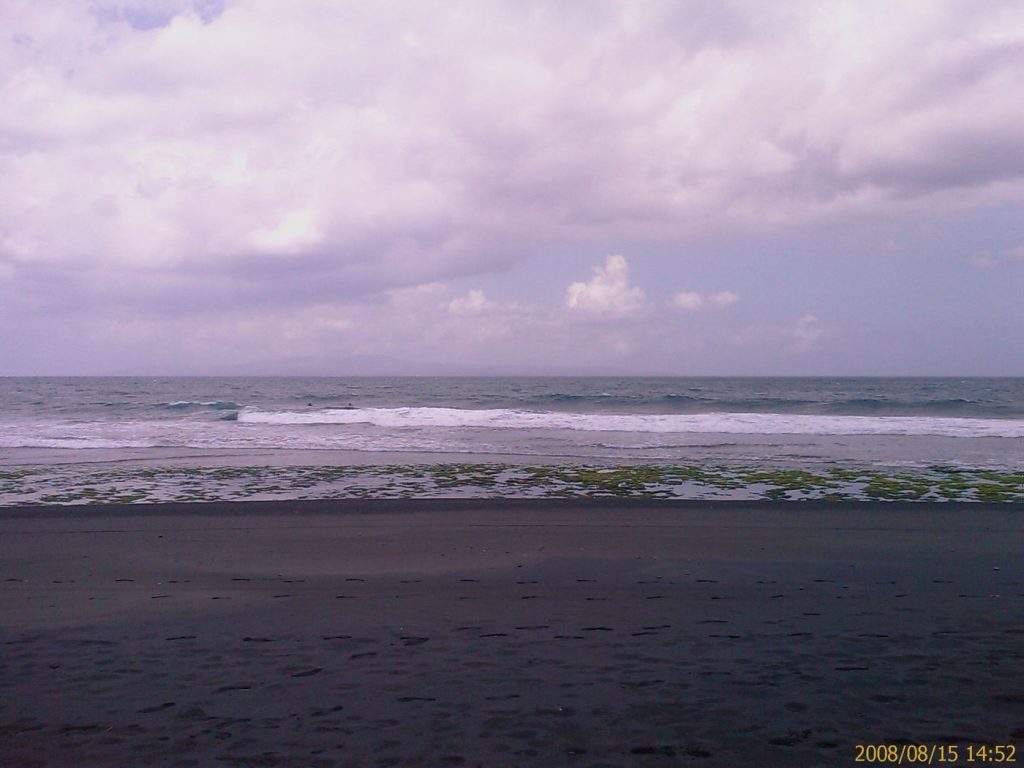
I remember standing in that paddy genuinely wondering if I was doing the right thing, whether I’d flown all this way on the strength of a magazine story to buy rice fields in front of a beach that showed me absolutely nothing.
“Then a white snake came sliding through the rice paddy next to the temple.”
– THE MOMENT EVERYTHING CHANGED
I mentioned it to the locals, and everything changed. Goosebumps, all round. That’s the temple snake, they told me, and no one except priests are meant to see them. In Bali, a holy white snake appearing is not a small thing. Suddenly I wasn’t just another foreigner sniffing around land. More people wandered over to ask what I was doing there, and I told them the truth: I was looking for a spot called Keramas.
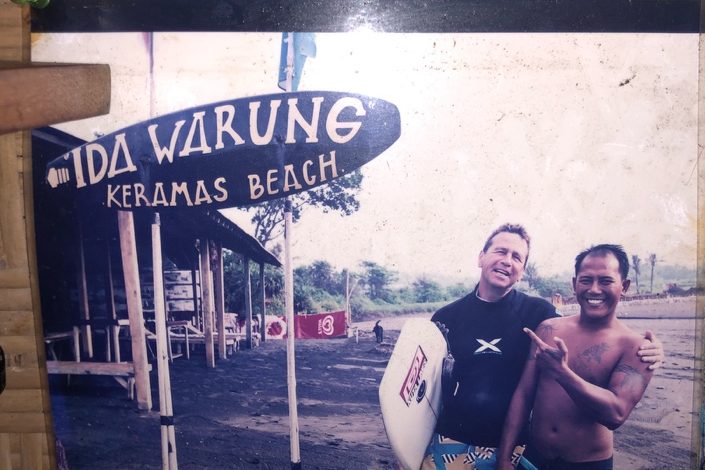
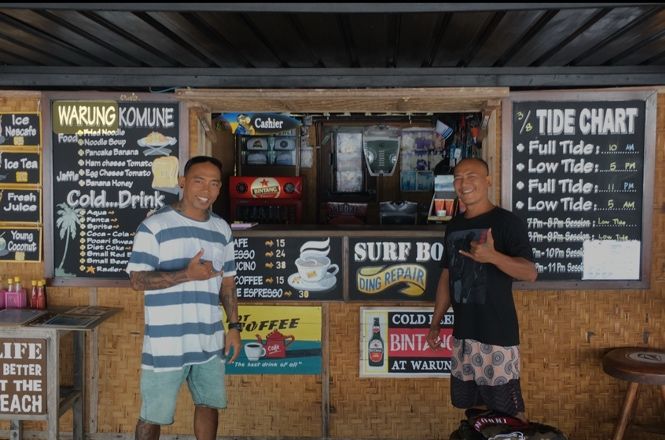
They pointed me half a kilometre down the beach. I walked into a beachfront warung and got talking to a local bloke Komang who told me his family owned the land I was asking about. Not just any family. The head family of Keramas. He offered to take me back to the village to talk.
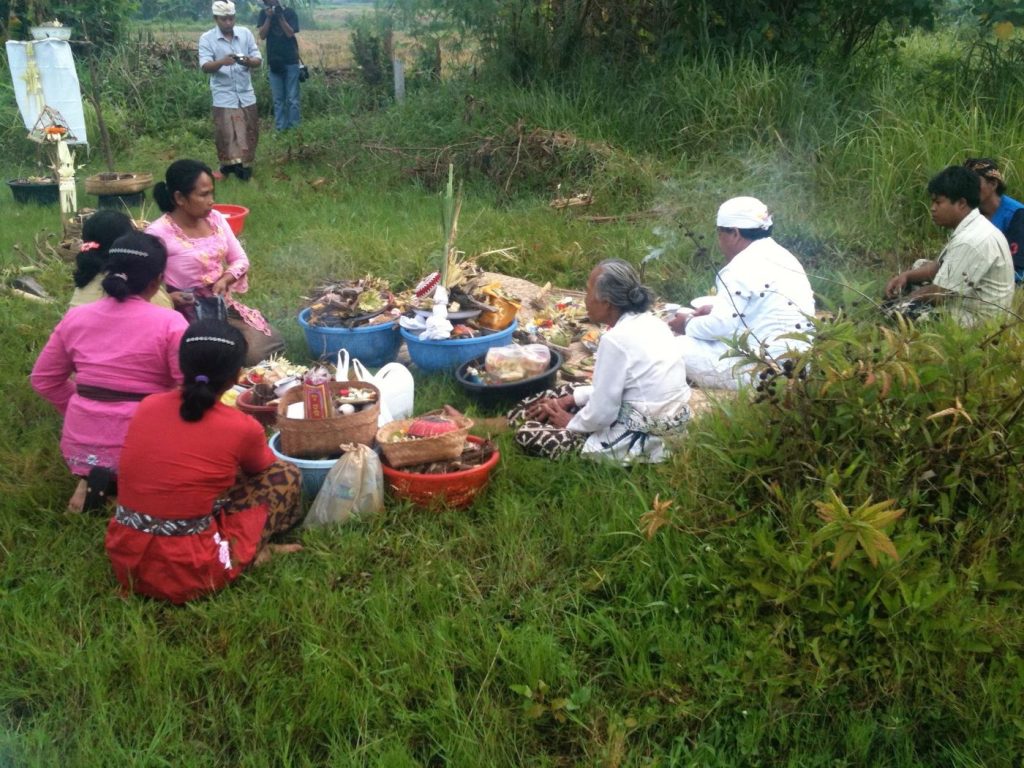
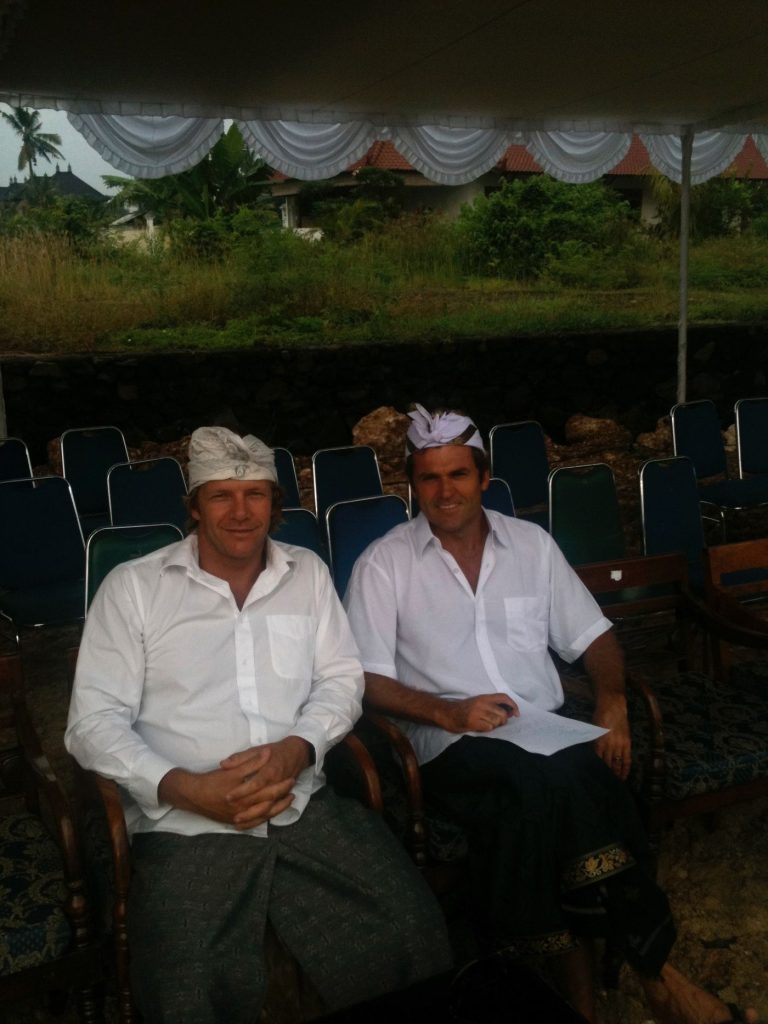
Their home was a traditional multi-pavilion Balinese compound housing several related families, built around a massive and genuinely beautiful family temple. We all sat down on the concrete floor, me and the six brothers, and spent the whole afternoon chatting away, fuelled by high-powered Bali black coffee. Hours of chatting about. Family, religion, waves, land, life.
At some point in that afternoon, the brothers said something I’ll never forget. They told me they had been waiting for me. They’d envisioned that this day was meant to be.
Make of that what you will. I’m an engineer. I deal in soil reports and structural loads, and I can’t explain a temple snake or a family who’d already decided I was coming. But I can tell you that by the end of that afternoon, sitting on a concrete floor with six brothers and a bloodstream full of Bali coffee, we’d crunched a deal for the land. That first parcel has since grown into the 4.5 hectares Komune sits on today.
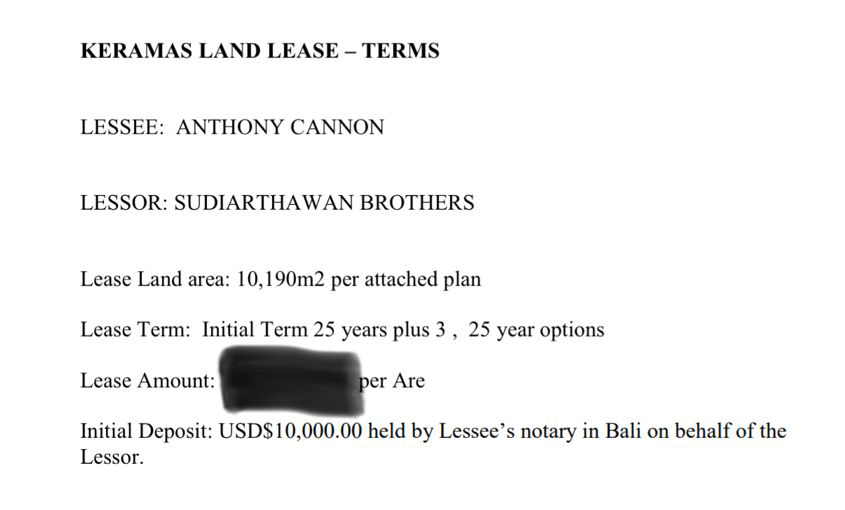
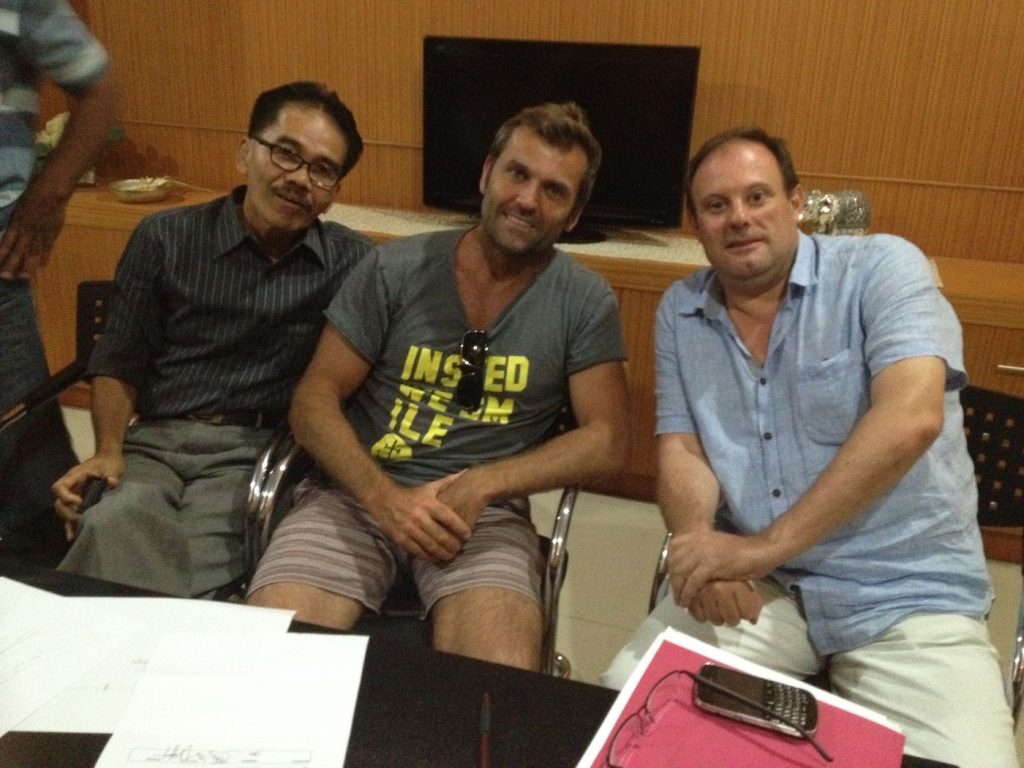
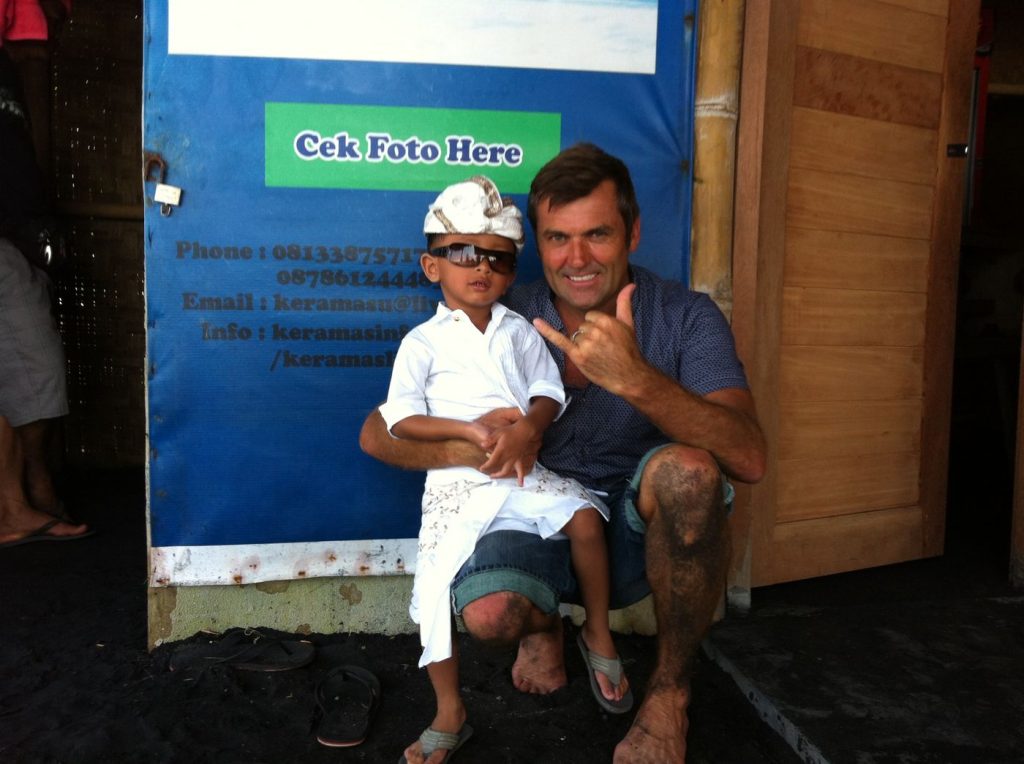
Here’s the part people find hardest to believe. I committed to buying land in front of a world-class wave I had never seen break, that at the time took three hours from Kuta to get to on a goat track road. On the one day that mattered, Keramas showed me absolutely nothing. Grey sky, flat ocean, empty lineup. I bought it anyway, on the strength of a magazine story, a white snake, six brothers and my gut. I trusted my instincts.
I finally surfed Keramas later in 2008. And I’ll tell you something that surprises everyone: in my opinion the lineup was harder to get a wave in back then than it is now. Before Komune existed, Keramas was a favourite with professional surfers. Kelly Slater. Jamie O’Brien. Taj Burrow. The pros had found it long before the surf magazines did, which tells you everything about the wave and the truth about crowds and resorts that I’ll get to. But first, let me tell you what this wave actually is.
Chapter 4: The Wave Itself
Why Keramas Is One of the World’s Great Waves
Strip away everything we have built here and ask the only question that matters to a surfer: how good is the wave?
Keramas is a combination of everything a surfer would want in a wave, and I don’t say that lightly, because waves that do everything are incredibly rare. Most great waves are specialists and great only a handful of days. Keramas is a freak all-rounder.
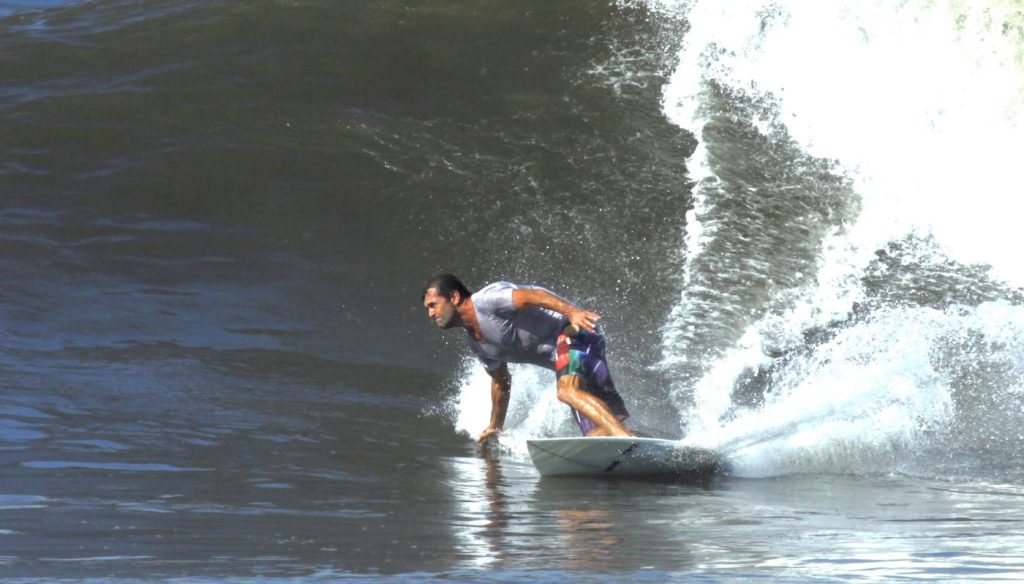
It starts with the barrels. Keramas has genuine barrel sections, and on the right day it will offer you two big barrels on a single wave. Then, instead of shutting down or flattening into a channel like a lot of barrelling reefs, it opens into a super high performance wall to the sand that lets you do full-speed turns or take to the air. Barrel, turn, barrel, air, all on one ride. That’s why you’ll see world tour surfers grinning like groms out here. The wave is a complete repertoire.
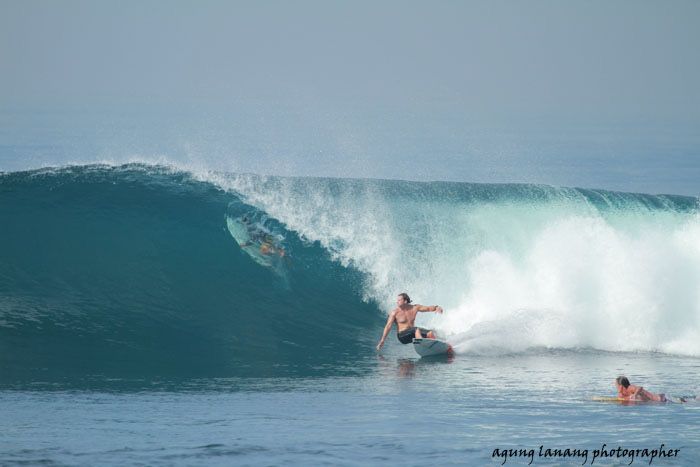
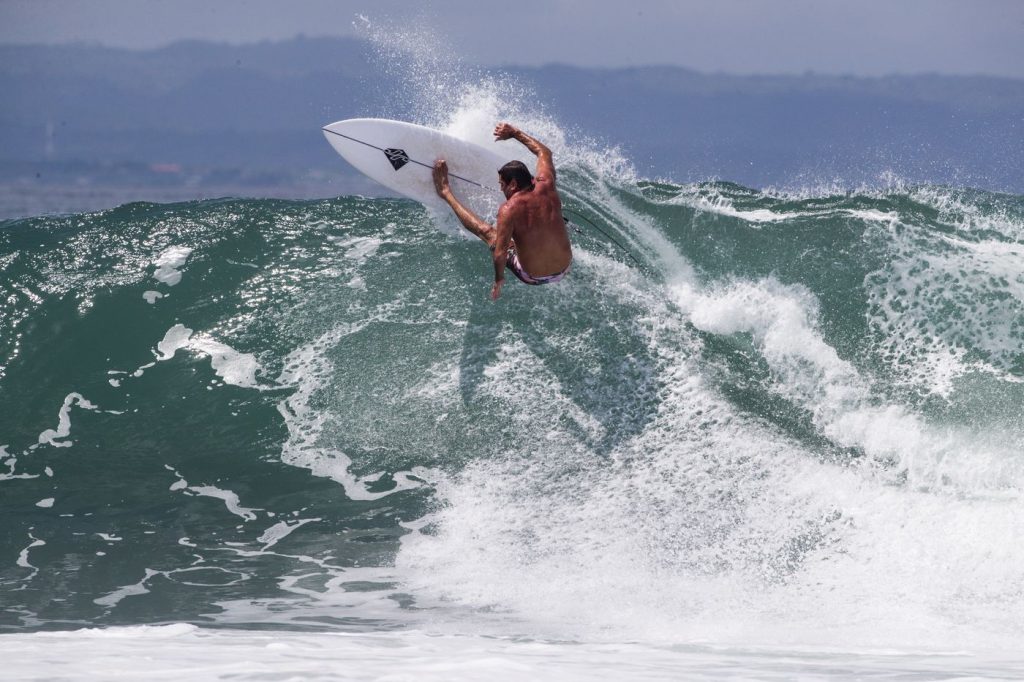
Then there’s the consistency, which for a travelling surfer matters way more than perfection. Keramas works easily 330 days a year. I’d argue it’s probably the world’s most consistently good wave, with waves better than your local at some point during each day. And the best part is that from November through April it pumps, with whole days of perfect conditions. That timing is the quiet miracle of the place: the wet season, when the famous west coast breaks are blown out and half of surf tourism goes home, is also when Keramas can be its best .
Now the access, which is where Keramas goes from great wave to once-in-a-lifetime gift from mother nature. Keramas is a proper reef break, but it sits right on the beach. You don’t climb down a huge cliff. You don’t paddle a mile out to sea. Nearly every other serious break in Bali makes you earn your session before you’ve caught a wave. Here, you walk off black sand, a few paddles through the sketchy keyhole, and you’re into the lineup.
Tides and timing: the crazy thing about this wave is it can turn magical at any time of day. Mostly it favours a rising mid tide, but depending on swell direction, every tide can work. From eighteen years of watching here, something the guidebooks won’t tell you: my most amazing surfs at Keramas have been at sunset, the exact opposite of what everyone assumes about the place.
The range is enormous. Two foot on a rising tide is still a genuinely fun wave. At the other end, it gets as serious as you want like a reverse Chopes. The biggest wave I’ve ever seen ridden here came at night, under lights, and that story deserves its own chapter (see below).
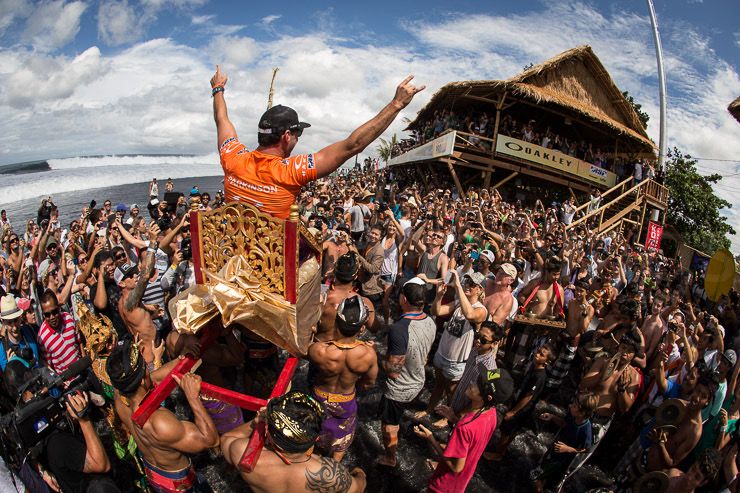
If you want independent evidence rather than a founder’s word, the World Surf League (WSL) chose Keramas for Championship Tour events three times: the Oakley Pro in 2013 and the Corona Bali Protected in 2018 and 2019. Any wave chosen three times for a world tour contest is chosen for a reason, and Keramas delivered every single time. Joel Parkinson won that 2013 event as reigning world champion, with the world’s best watching huge barrels from the beach club fifty metres away. The legendary Mad Hueys 1 star comps were held year after year with an all star cast in flawless conditions as did the inagural Fisher Bali Pro (self) named after global DJ Paul Fisher.
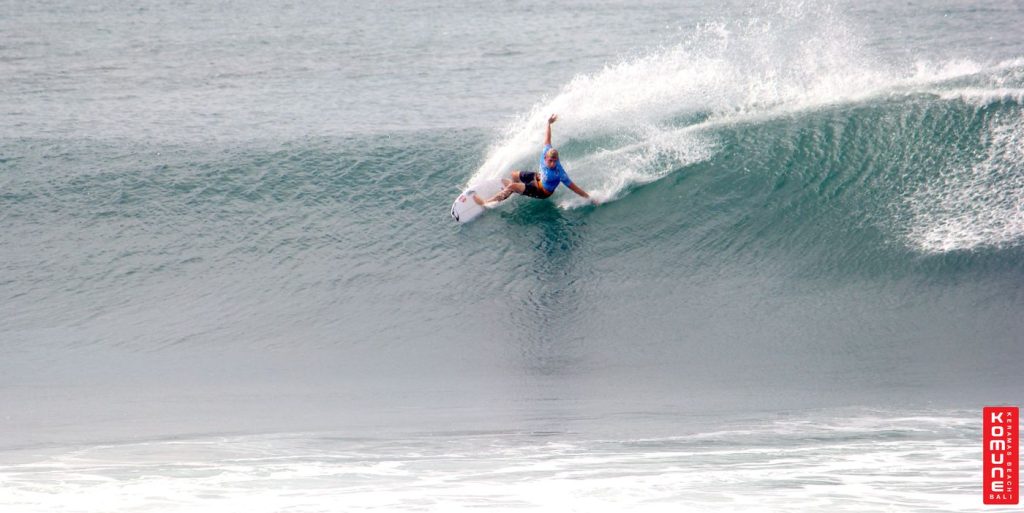
How does it stack up against the Bali names everyone knows? Uluwatu and Padang Padang are amazing, world-famous waves and I love them. But they involve long walks and long paddles, and your whole day bends around getting to and from them. Canggu gives you convenience, but it’s nowhere near the standard of wave and insanely crowded. Keramas is the only place in Bali, and one of very few on earth, where a genuinely world-class wave breaks fifty metres from your bed.
Who’s it for? Keramas has the full range — super fun and playful for intermediates on a small day, right up to super advanced, critical waves that demand fitness and total commitment on a big one. Beginners can still have a great holiday here, with more mellow waves nearby when Keramas gets hectic, and as you’ll see, most of our guests never surf at all.
What should you ride? Board length and volume won’t save you much when it’s got size. You have to be fit, and you have to knife your board down the wave at takeoff. My own quiver is a 6’1” epoxy around 30 litres as the go to, a 6’2” PU around 34 litres as the step-up, and an epic 5’8” carbon fibre fish for the smaller or bit onshore days. Boardshorts, year round. No booties — you step straight off sand.
And one warning I give every guest. The biggest mistake first-timers make at Keramas is trying to swim in the open ocean. Don’t. It’s a powerful reef break with real current, not a swimming beach. Surf it, watch it, and swim in the pools.
Chapter 5: Building Without Ruining
Building Komune Without Ruining Keramas
Surfers hate developers. I know, because I’m both.
Every surfer has watched a break they love get ruined: the headland carved up, the river mouth choked, the vibe of a place bulldozed along with the trees. I’ve felt that hostility from the inside of the tribe, and I knew from day one that if I got this wrong, I wouldn’t just have a failed resort. I’d have my name on the destruction of one of the world’s great waves.
And make no mistake, the destruction was coming. When I first came to Keramas in 2008, this stretch of coast was under serious risk of being totally ruined by bad, ill-considered development. This site was always going to be developed by someone, at some stage. The only question was whether it would be developed by people who understood what was at stake in that lineup, or by a spreadsheet in an office tower.
In 2009 I brought a guy to Bali for whom, by that time, I had developed four Fitness First gyms, worked with on the planning of an eco retreat at Gwinganna, and who had acquired homes in several of my developments. His name was Tony de Leede. Tony didn’t surf, but he was one of the world’s most respected wellness entrepreneurs. I didn’t know it at the time, but from his first trip he was seeing another side of Komune that I was completely missing. Wellness. More on that later. Since TD didn’t surf, I was surprised by his keen interest in being part of this project, and like the deal with the six brothers, we soon became equal partners.
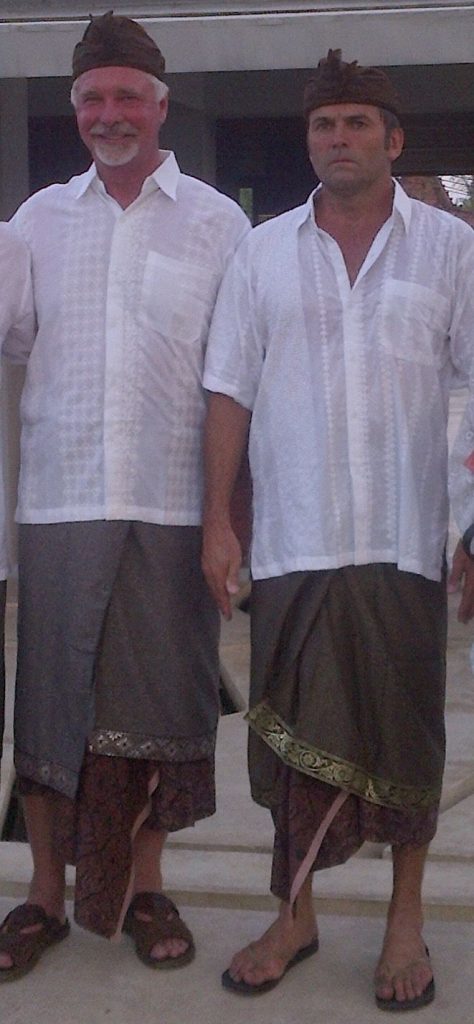
One of the first things we did after that was bring in a surfer I’d long admired, not just for his surfing but for his intelligence and the respect he carries in the global surf community: Luke Egan. Luke came in as a partner alongside me and Tony de Leede, with a clear job. Make sure Komune kept its surfing and environmental credentials, and its respect, particularly with the Balinese community.
One of the first things Luke did tells you everything about why I wanted him. Before we put pen to paper on a single design, he set up meetings for me with Rizal Tandjung and Tipi Jabrik, two legends at the top of Indonesian surfing. We laid out the proposal and asked for their honest advice. Both understood the reality: the Balinese surfing community was better off dealing with surfers developing this wave than with a huge resort chain owner in America or China who’d never paddled out anywhere. Examples of that occurring abound in Bali.
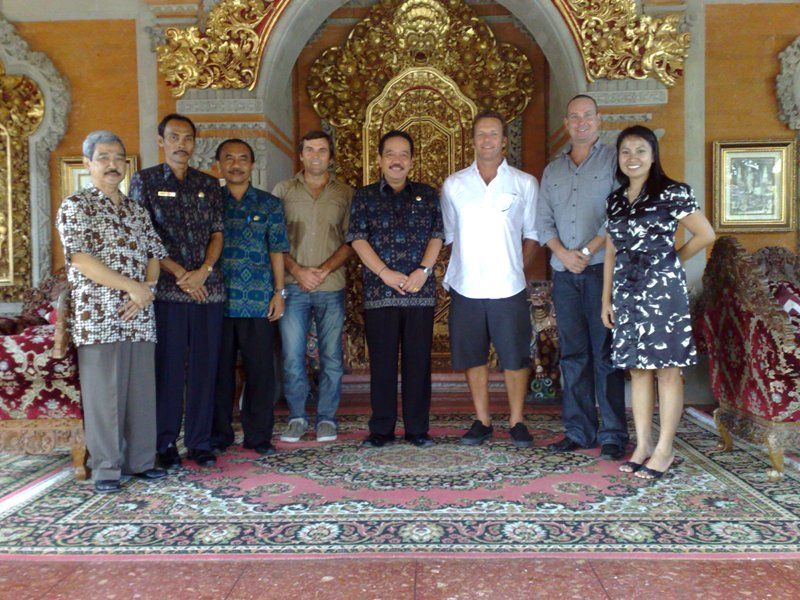
“It was an honour for the Balinese surfing community to accept us as part of their fabric, not the other way around.” Luke Egan
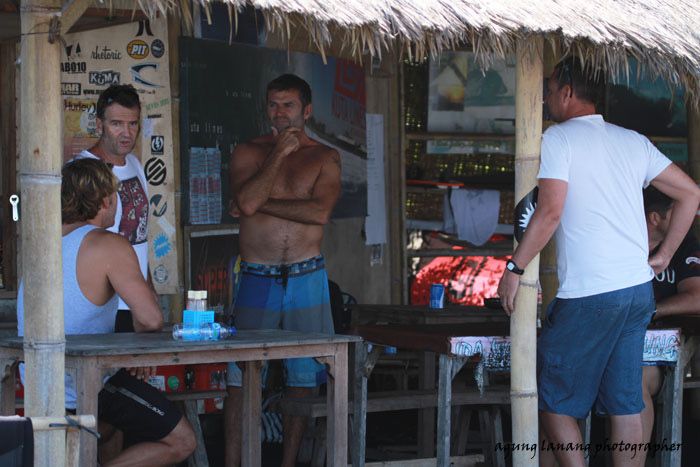
Tipi’s most critical piece of advice became our permanent Komune policy. Protect the wave and keep the existing surf culture. Keep the Ida Boys’ warung and make sure local Indonesian surfers can always get a cheap jaffle and a plate of noodles and feel completely at home on their own beach. So the warung stayed, and the family kept their place of work: the food, the board storage, hire and repairs, the surf photos. It’s still there today.
Beyond the lineup, we made the village three promises.
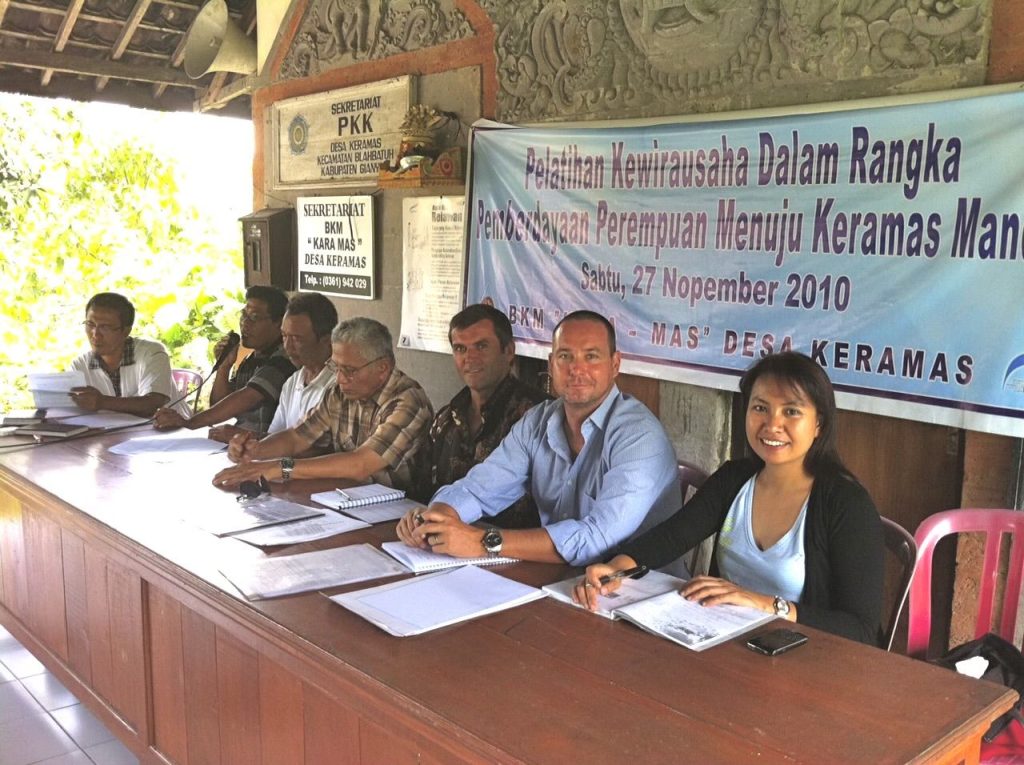
One, we would build our team from Keramas locals. That meant creating a massive training program, because our village was a long way from Bali’s established resort belt and hospitality experience didn’t exist here. Today, more than 80 per cent of our staff come from the local village.
Two, we would donate 5 per cent of our profit after tax, every year, to the Keramas village charity for social programs and environmental management. These donations feed many village families during Covid.
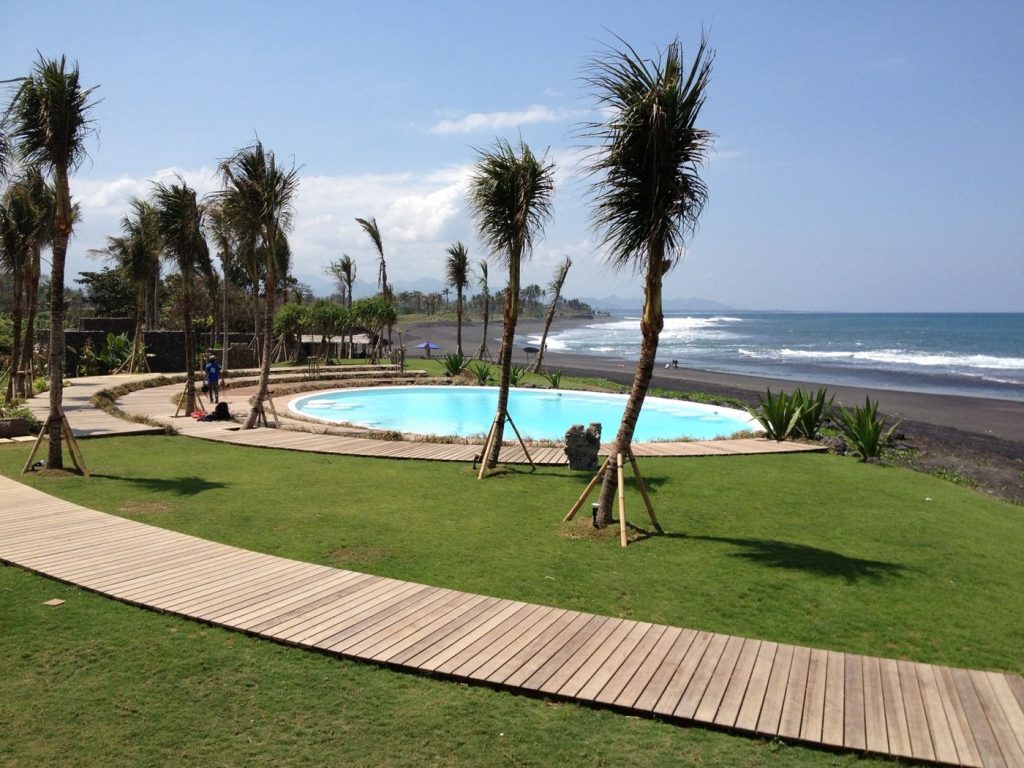
Three, we would work extremely hard to stop Keramas ending up like other parts of Bali: overbuilt concrete jungles. We wanted to lead by example and prove you could run a profitable business that, from the surf or from the outside, looks like beautiful tropical jungle, with only a few traditional warungs visible and every building hidden within the landscape. To that end we planted 13,000 plants and created our own microclimate.
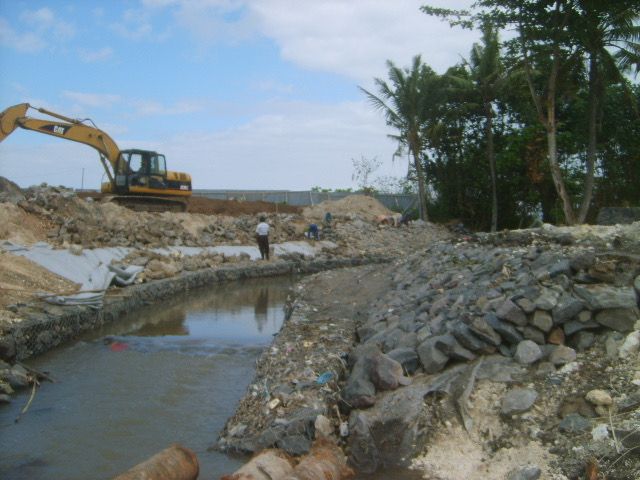
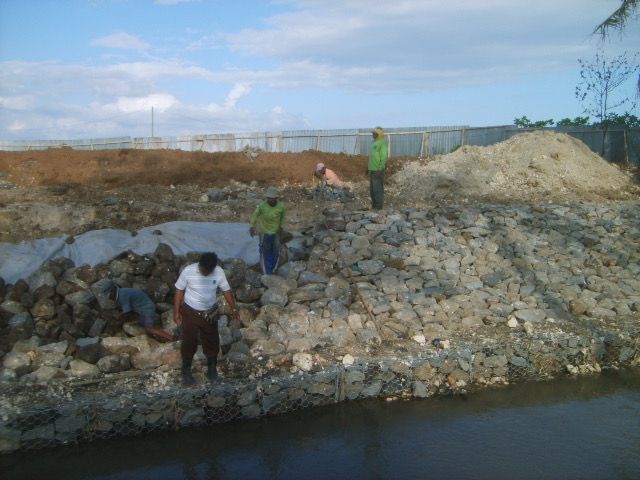
The river got the same treatment. The river is what created this surf break, and Bali’s rivers carry a heartbreaking amount of plastic. So we designed and installed the first river pollution trap in Bali, and pushed the thinking behind it through our One Village Plastic Free charity. Our theory is simple: if every operator looked after their own little patch, Bali’s rivers could be clean.
Unfortunately, the truth about protecting a wave is that the job is never finished. In December 2024, a scheme backed by global interests tried to develop a huge marina right where the Keramas surf break is. A marina in 10 foot surf zone?? On top of one of the ten best waves in the world. Luckily, the grassroots village community rose up and squashed that proposal. The village won that round, and I’ve never been prouder of this place and the community. But I’ll be honest with you: we operate in a constant state of fear and anxiety about what scheme will come up next. Anyone who tells you a great wave is ever permanently safe hasn’t been paying attention to Bali and around the world.
Chapter 6: The Real Luxury
Why Luxury Means Time, Not Marble
The luxury hotel industry measures itself in marble, thread counts and butlers. For a surfer, all of that is decoration. There is only one luxury that matters, and it’s the one no five-star chain can manufacture: time on the wave.
Think about what a normal day of surf travel in Bali actually looks like. Drive an hour. Walk twenty minutes. Climb down a cliff. Paddle. Surf your window before the tide kills it, then do the whole thing in reverse, and call that your one session. Most surf holidays are logistics with a bit of surfing attached.
“Three minutes from a beachfront suite to sitting at the top of the Keramas lineup. In boardshorts, barefoot, across sand.”
THE COMMUTE
That single fact rearranges an entire holiday. Our guests surf three or four times a day, picking the eyes out of the conditions. Dawn patrol in the glass. Back for breakfast. A tide-timed session mid-morning or an afternoon glass-off, and if the fever takes you, a night surf under lights.
And when you’re not surfing, the wave is still with you. All the beachfront pool suites overlook the break. You can watch the surf from your bed, from your own pool, at breakfast, or at dinner while the night crew trades barrels under the floodlights. When it’s big, you don’t just see it, you can feel the sets hitting the reef from your bed. There is no better alarm clock on this planet.
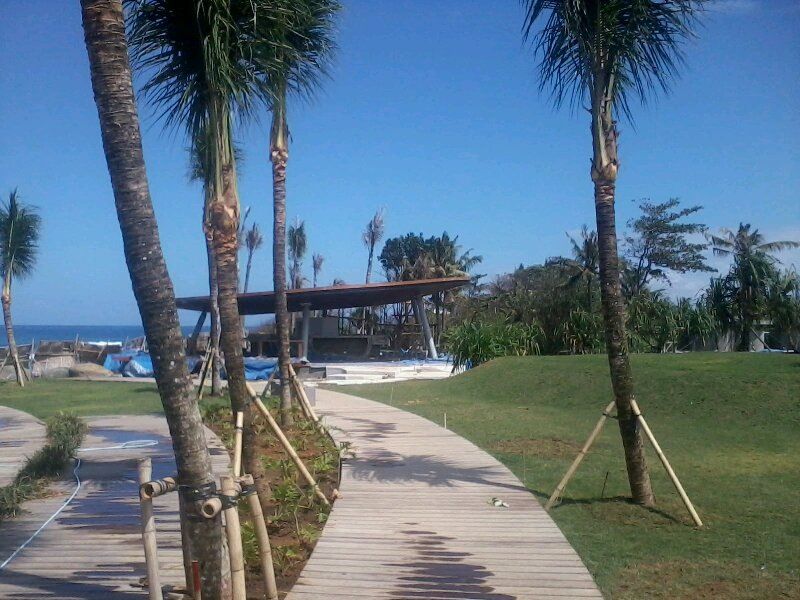
Which brings me to the night surfing, and the story I promised you. It’s also the story of the dumbest thing Luke Egan and I have ever done, so enjoy it at our expense.
We had a vision to create the world’s first permanent night surfing facility. What we didn’t have was any idea what we were doing! We bought three massive floodlights, bolted them on top of our existing restaurant, about six metres off the ground, switched them on one evening and paddled out into six foot of onshore slop at dead low tide.
Six metres of elevation meant the light glanced sideways across the surf, and the visibility out there was the craziest thing I’ve experienced in the ocean. Neither of us had any idea where we were. We both took off on our first waves, both fell out of the sky completely blind, and both hit the razor-sharp reef. First wave each. We ended up on the beach together, licking our wounds, two grown men who’d spent their lives around waves, bleeding in the dark under our brilliant new lights.
So we did what we should have done first: got expert help. I looked up who supplies the lights at the MCG in Melbourne and rang them. I don’t think the blokes who light the Melbourne Cricket Ground had ever fielded a phone call quite like it. They told us straight: what we wanted was very hard, and it would take two 25-metre stadium light arrays, the kind you’d see towering over a major stadium. To everyone’s credit, we all agreed to give it a crack. And night surfing was born.
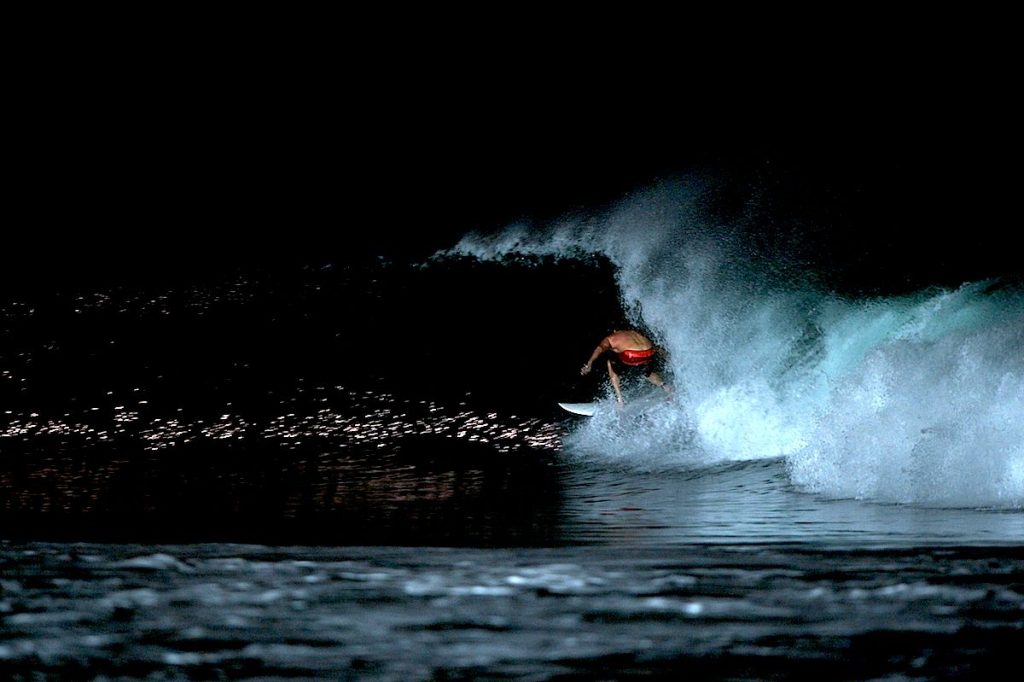
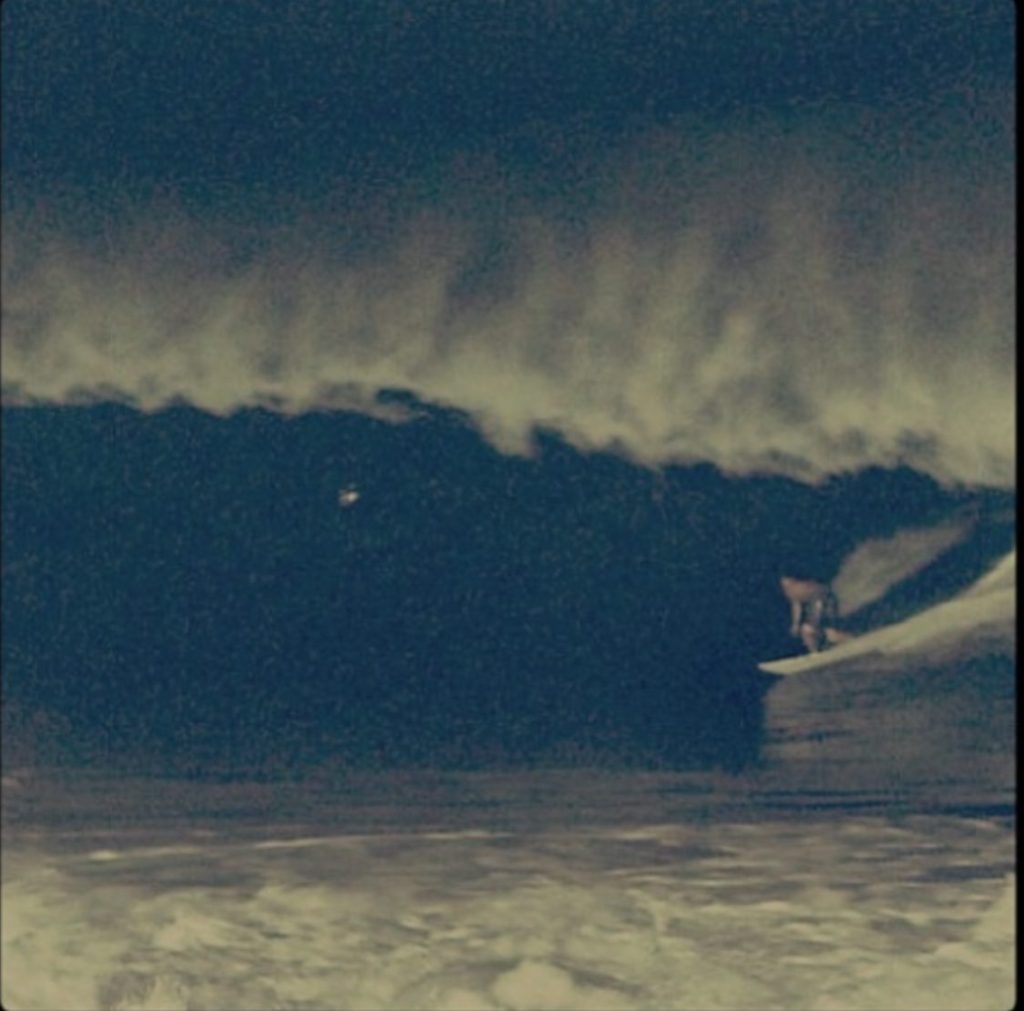
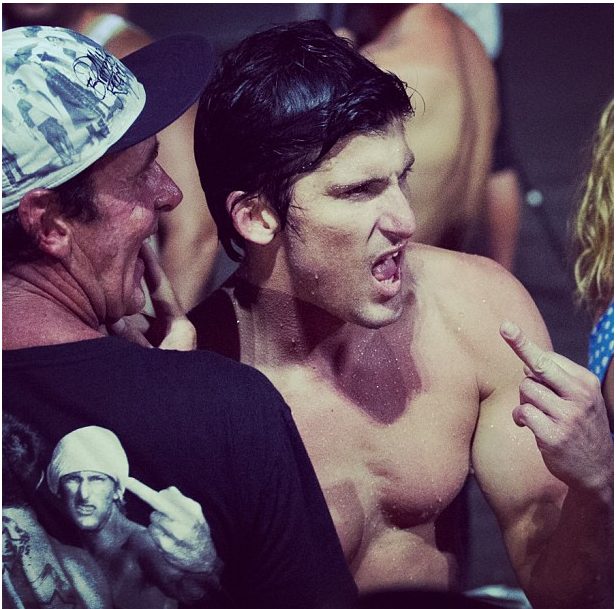
Opening night, the ocean decided to christen it properly: ten to fifteen foot. Bruce Irons, the Mad Hueys, Fuel TV and a pack of pros paddled out in front of a thousand people, plenty of whom were getting pinballed down the beach by the massive sets. Somewhere in that madness, Lee Wilson rode the biggest wave I’ve ever seen at Keramas, a fifteen-footer, at night. He pulled into a huge barrel and that was the last we saw of him for a while.
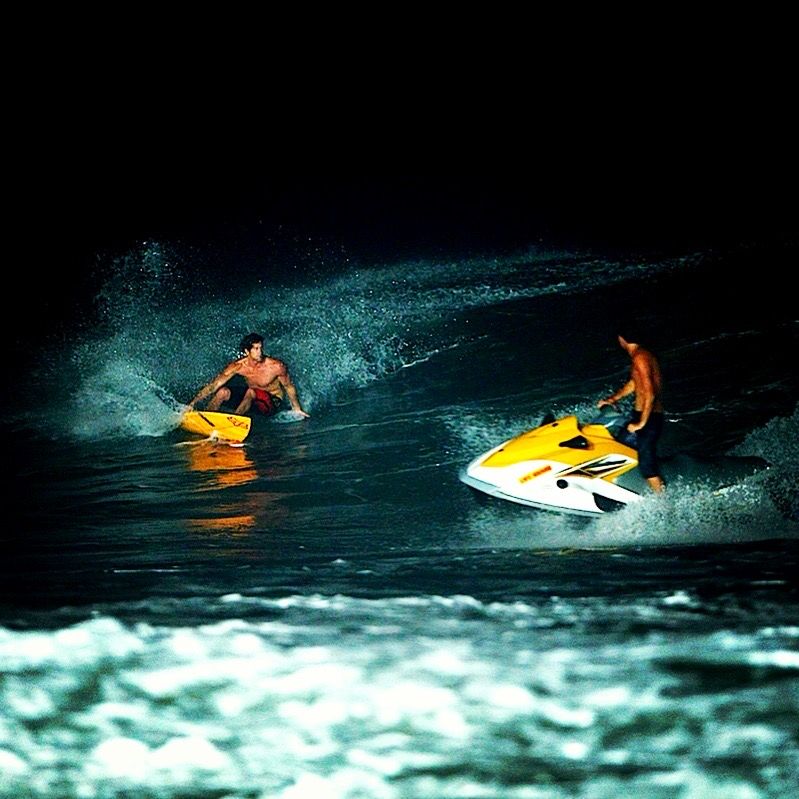
That’s what I mean when I say luxury means time, not marble. A world first, born from two idiots bleeding on a reef, that means the wave in front of your room never sleeps. Marble can’t do that.
Chapter 7: The Other 80 Per Cent
Why Families Love Komune
Remember 1994? Alana waiting patiently at that Jimbaran resort while I trekked up to Ulus every day? That memory is the entire design brief for Komune. When we sat down to plan this place, my instruction to myself was exact: design Komune specifically so that my family would be exceptionally happy to be here for two weeks straight while I surf, and would not even notice or care that I’m out in the water.
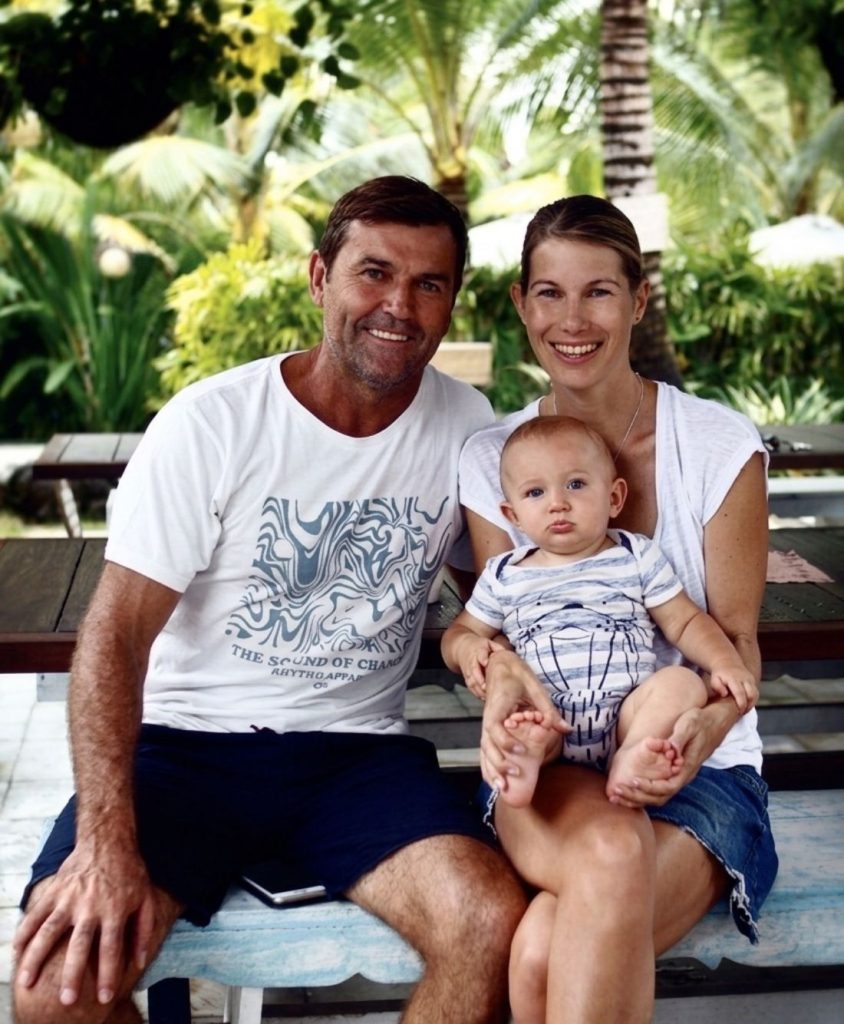
And here’s how that design brief closed its own loop. Alana now spends several months a year at Komune with Albe, Milah and Nilaya. All our kids have grown up here, and they are genuinely made to feel part of the family — not by a hospitality program, but by the people of this village. The woman who once waited at a Jimbaran resort for a surfer to come back doesn’t wait anymore.
That’s the dirty secret of the surf resort business, and hardly anyone in it has worked this out: you’re not really building for the surfer. The surfer needs a wave, a board and a bed. You’re building for everyone the surfer loves.
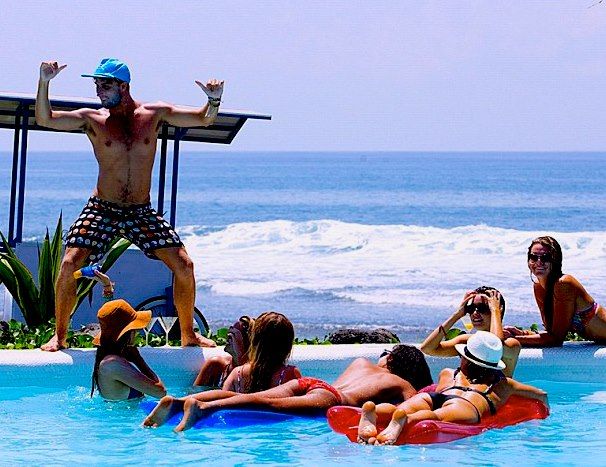
So we built for them, properly. Seven different yoga shalas. A fully equipped Merrithew Pilates studio. A serious gym. A village green sports ground. A longevity centre. A day spa. A hair and beauty salon. A boutique. A kids club with its own skate park, where I spend half my mid-mornings having a skate with my son between surfs. And directly across the road, the amazing Bali Safari Park, which buys any parent a full day of hero status.
“Only about 20 per cent of our guests actually surf. The rest are surfing families, wellness retreat guests and wedding groups.”
– THE NUMBER THAT PROVES THE PHILOSOPHY WORKS
That was never an accident. And it produces a beautiful side effect for the surfers reading this: a beachfront resort at a world-class wave that doesn’t flood its own lineup, because four out of five guests never paddle out.
The families aren’t the compromise at Komune. They’re the point.
Chapter 8: Recovery is Training
Surfing, Wellness and Longevity
People sometimes ask why a surf resort has seven yoga shalas and a longevity centre, as if wellness were something we bolted on for the wives. Wrong way around. Surfing and wellness belong together at the deepest level, and every surfer over forty knows exactly what I mean.
To keep surfing, you have to care for your body. Surfing requires massive strength and flexibility, and it pays you back with fatigue and tightness. The ocean doesn’t care how old you are; the takeoff at six-foot Keramas demands the same thing from me now as it did twenty years ago. If I want to keep knifing a 6’1” into that wave into my sixties and beyond, recovery isn’t a spa day. It’s the training program.
This side of Komune carries the DNA of my partner Tony de Leede, the man behind Fitness First and the Gwinganna health retreat. What I planned as a small, low-key surfers’ resort grew, largely through Tony’s vision, into an active lifestyle resort where the wellness is as world class as the wave — and what makes Komune what it is today.
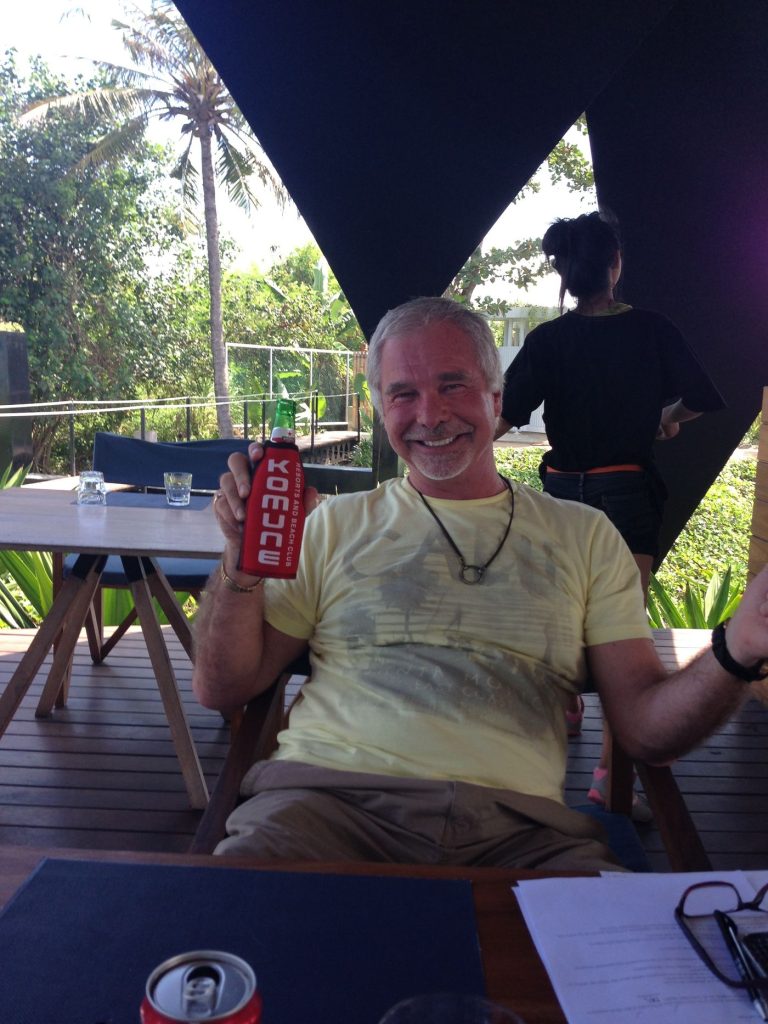
Here’s my perfect recovery after a double session, and you can run it yourself the day you arrive. A deep tissue massage from our spa therapists, who most guests tell us give some of the best massages they’ve ever had. A yoga session with Dinda. Then a ice bath and sauna contrast to reset the muscles, with ice and magnesium doing the honest work. Once you’ve done that, you can get back in the surf. That’s the whole point. Not wellness instead of surfing. Wellness so you can surf more, harder, for more decades.
The professionals figured this out long ago, which is why they keep coming. Jack Robinson, Joel Parkinson, Luke Egan and Julian Wilson stay and train here all the time. When world champions use your resort to prepare their bodies, you’re probably doing something right.
Chapter 9: An Equal Lineup
Why Komune Means Community
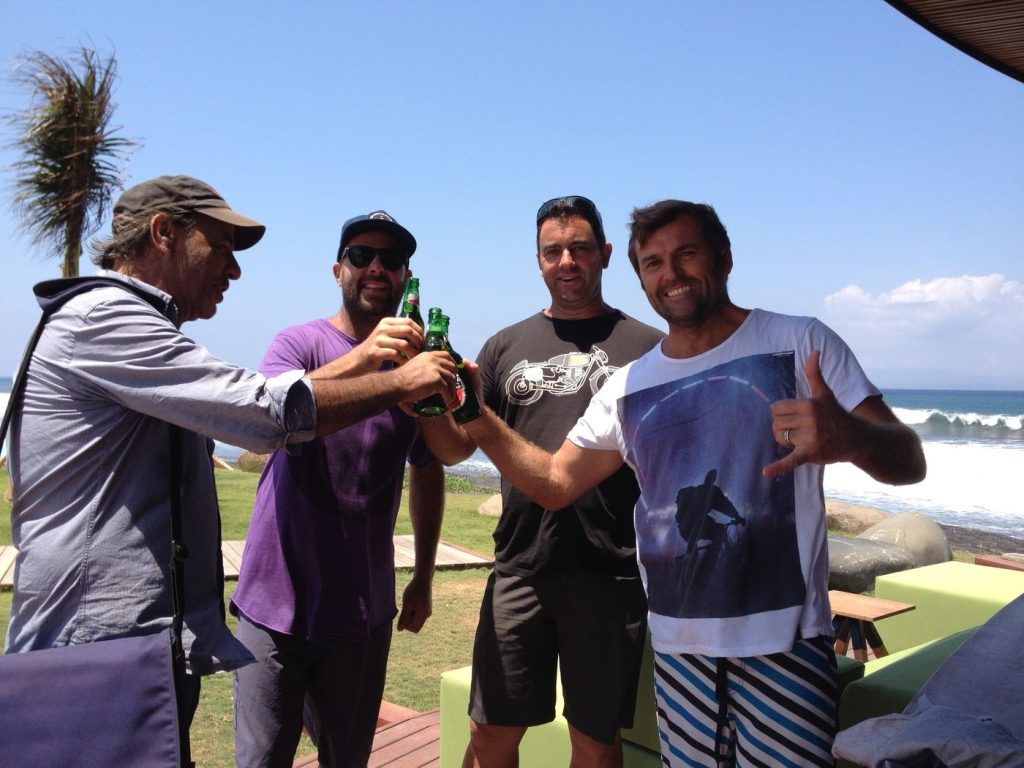
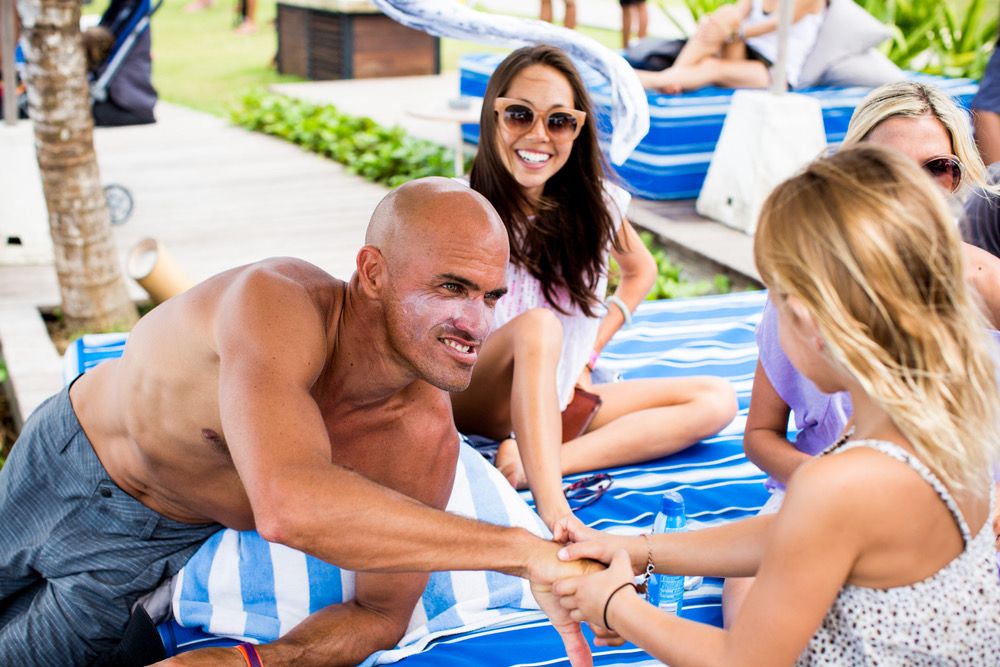
The name isn’t decoration. Komune is about communing, and the whole idea of the brand is creating a sense of community where guests end up friends by the end of the week. Kids playing together. The guys surfing. Everyone catching up at the pool or in yoga. Wedding groups who arrive as two families and leave as one. We watch it happen every single week, and it never gets old.
But there’s a harder-edged philosophy underneath the warm and fuzzy stuff, and it shaped one of the biggest commercial decisions we ever made.
Surfers in the water are equal. That’s one of the last truly equal places on earth. Priority in a lineup goes to position and commitment, not net worth. The bloke on the battered secondhand board has exactly the same claim on the next set wave as the CEO.
So we built the resort the same way, on purpose. We price our rooms for all budgets, not just five star. A young surfer scraping together a trip can stay at Komune, and so can a family who want the best beachfront pool suite on the island, and in the lineup out front they’re identical. Our passion for surf is the priority, not money. Plenty of consultants have told us over the years to push the whole place upmarket. We never will, because the mixed lineup is the culture, and the culture is the product.
And it’s our Balinese staff who bring it to life, the same village families who’ve been part of this from that first afternoon on the concrete floor. They make every guest feel part of our family. They remember your name, your kids’ names, your coffee order and your favourite board. It’s the number one thing guests tell us, ahead of the wave, ahead of the view. That should tell you something.
I told you at the start that parts of this story would be uncomfortable, so here is the hardest chapter of the whole eighteen years. When Covid hit, the government shut Bali’s airport, and it stayed shut for two and a half years. We were running a 106-room hotel with two or three guests a day. And we had to make a call, because nobody on earth could tell us how long it would last: close the doors and let go of the village family that built this place, or stay open into the unknown.
We chose to stay open. We ripped through two and a half years of cash reserves across two resorts, and our staff — all of them — agreed to go to half wages to help carry the load. Even that wasn’t enough. To see it through, we ended up selling our other hotel, Komune at Greenmount Beach on the Gold Coast. One of the hardest decisions of my life. Looking back, it was a huge sacrifice, forced on us by a government shutdown none of us could control or predict. But the promise we made to this village came before the balance sheet, or it never meant anything. When the airport finally reopened, the team that welcomed the first guests back was the same family that had been here all along.
Chapter 10: The Verdict
Is Komune the Best Surf Resort in Bali?
Eighteen years in, here’s my honest answer, and my logic.
First and foremost, the location. Right in front of the best wave you could possibly imagine, so consistent and offering so much to every type of surfer. You can be lying by the pool drinking a cocktail while, fifty metres away, someone is getting the barrel of their life. I don’t know of anywhere else in the world where that sentence is true at least 330 days a year.
Second, the equality. Rooms priced for every budget, a lineup where nobody’s money matters, and a culture built around the thing surfers actually share: the love of the waves, not the bill at checkout.
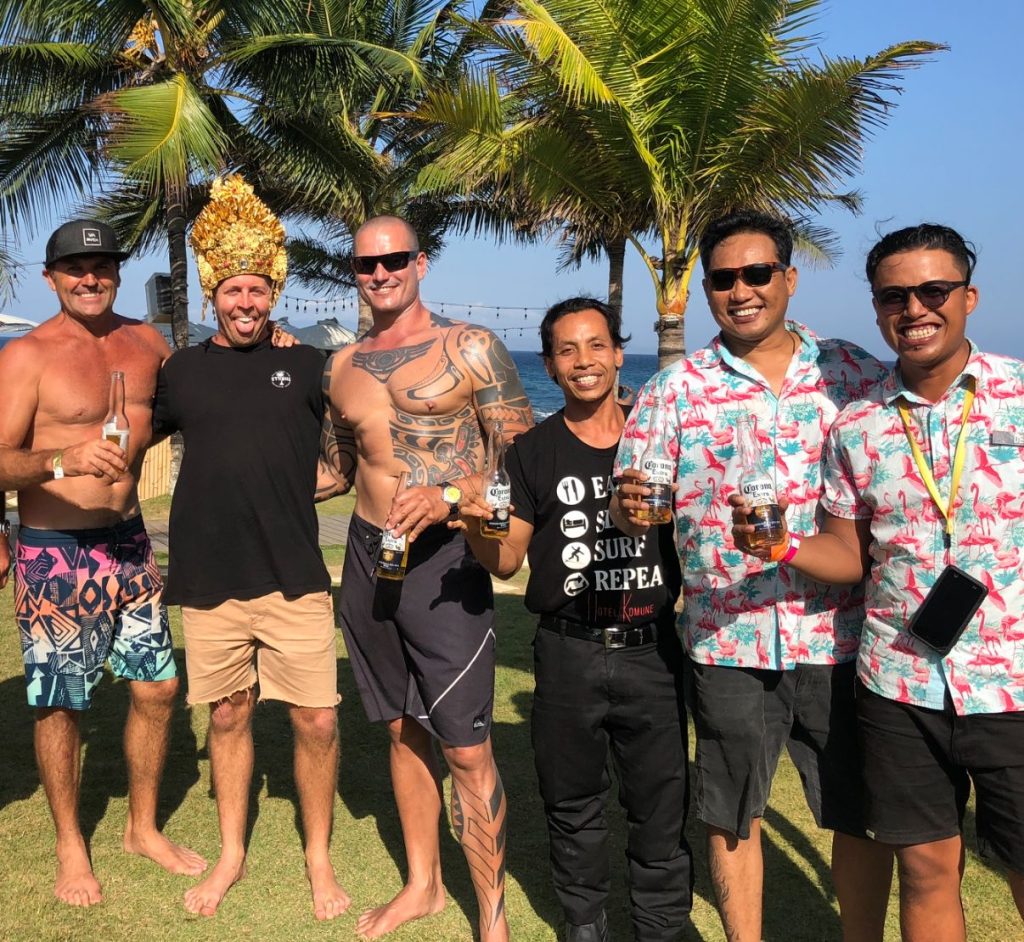
Third, the people. The most important. A resort staffed by the village that owned this land for generations, a warung the local boys never lost, and a family feeling you can’t fake, audit or franchise.
That’s my case. But here’s the part that keeps me up at night.
“My biggest fear isn’t a competitor. It’s Bali losing the things that make it Bali.”
TONY CANNON
Its culture, its religion, its connection to the land. All of it is interwoven with the Subak irrigation systems that have fed this island for centuries, and all of it can be ruined by thoughtless development, by stunning fertile land being concreted over one project at a time. I’ve watched it happen to places I loved on this island. I see a few signs of it happening at Keramas.
What gives me hope is the village. Keramas has a very strong sense of its culture and environment, and it actively defends both. When that marina scheme came for the wave itself in December 2024, backed by massive global interests, it wasn’t a corporation that stopped it. It was the grassroots village community rising up. But we live with the anxiety of the next scheme, always. Protecting this place isn’t a chapter of the story. It’s a permanent condition of it.
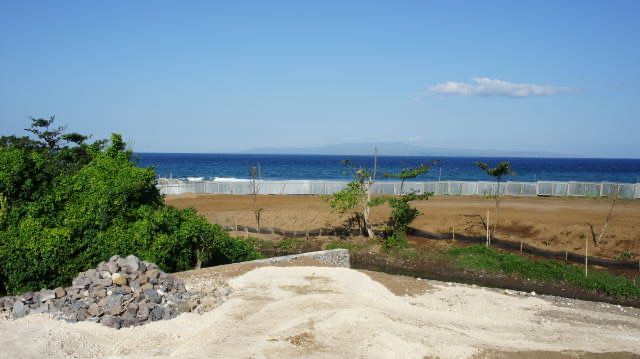
So is Komune the best surf resort in Bali? I think it’s the best place in the world, and I’ve told you exactly why, so you can discount the founder’s bias and still have plenty left over. Eighteen years ago I stood in a rice paddy on a flat, grey, miserable day, looking at a beach with no waves and wondering if I’d lost my mind. A white snake crossed the paddy. Six brothers on a concrete floor told me they’d been waiting for me. I trusted my instincts, and every single morning since has paid that trust back tenfold.
I still wake up in the dark and paddle out to watch the craziest sunrises you’ll ever see, the Lombok volcanoes on the horizon, dead glassy waves, sometimes just me and the Ida boys. Thirty years after one barrel at Uluwatu locked in my love of this island, I get to live in front of the wave of my life. I am deeply grateful every day for what this magical place has given me and so many others.
Come and test the question yourself. I’m the bloke in the lineup at first light on the 6’1”. Say g’day. The first Tommy’s margarita is on me.
Keramas & Komune, at a Glance
Quick Answers
Where is Hotel Komune Bali?
Hotel Komune Resort & Beach Club is at Keramas on Bali’s east coast, in Gianyar regency, directly in front of the Keramas surf break.
How far is the Keramas wave from the rooms?
Three minutes from a beachfront suite to the lineup. The beach club is fifty metres from the break, and you walk off black sand straight into the water.
When is the best time to surf Keramas?
Keramas works easily 330 days a year and pumps from November to April — Bali’s wet season, when the west coast breaks are blown out. It mostly favours a rising mid tide, but every tide can work depending on swell direction.
Can you surf at night at Komune?
Yes. Keramas has permanent stadium floodlights on two 25-metre towers — a world first — and Komune is the only resort in the world running night surfing under lights.
Has Keramas held professional surfing contests?
Three WSL Championship Tour events: the Oakley Pro 2013, won by Joel Parkinson as reigning world champion, and the Corona Bali Protected in 2018 and 2019.
Is Komune only for surfers?
No. Only about 20 per cent of guests surf. The rest are surfing families, wellness retreat guests and wedding groups, with seven yoga shalas, a Pilates studio, gym, spa, kids club, skate park and longevity centre.
Can beginners surf Keramas?
On small days it’s fun and playful for intermediates, and there are mellower waves nearby for beginners. With size, Keramas is an advanced reef break demanding fitness and commitment.
Do professional surfers stay at Hotel Komune?
All the time — Jack Robinson, Joel Parkinson, Luke Egan and Julian Wilson stay and train here. Before Komune existed, the lineup was already a favourite of Kelly Slater, Jamie O’Brien and Taj Burrow.
How does Komune support the Keramas community?
More than 80 per cent of staff come from Keramas village, 5 per cent of profit after tax goes to the Keramas village charity for social programs and environmental management each year, and Komune built Bali’s first river pollution trap under its One Village Plastic Free program.
Stay in front of the wave — book Hotel Komune Bali
By Tony Cannon · Founder, Hotel Komune Resort & Beach Club · Keramas, Bali